Questions about chiropractic safety are the first thing many new patients raise, and they are entirely reasonable ones. As a chiropractor Sydney, Spine and Posture Care sees this question regularly, from patients who have heard conflicting things online, from those whose GP has raised concerns, and from people who simply want to make an informed decision before their first visit.
This guide addresses the most common concerns directly, with reference to the research that actually informs the answer.
What the Research Actually Says About Chiropractic Safety
The safety of chiropractic care has been studied extensively over the past three decades. The body of evidence that has emerged is consistent: chiropractic treatment performed by a qualified, registered practitioner carries a low risk of serious adverse events and a well-documented profile of mild, temporary side effects that resolve quickly.
The most comprehensive analysis of chiropractic safety, published by Gouveia and colleagues in 2009, combined data from 26 separate studies and found that serious adverse events occurred in somewhere between 1 in 100,000 and 1 in 5.85 million treatments. The odds of being struck by lightning sit at approximately 1 in 500,000, making a serious chiropractic complication comparable at most, and in many datasets considerably lower.
A 2007 systematic review by Rubinstein, supported by Thiel’s findings in the same year, concluded that the risk of a serious adverse event from chiropractic care was low to very low, and that for the conditions most commonly treated, the benefits consistently outweighed that risk. These are not outlier findings. They represent the mainstream conclusion of the research literature.
How Rare Are Serious Complications Really
The numbers from the research are worth understanding clearly, because public perception of chiropractic risk is often significantly higher than the evidence supports.
For context, consider the risk comparison across common treatment alternatives:
| Treatment | Risk of Serious Complication |
|---|---|
| Chiropractic spinal manipulation | 1 in 100,000 to 1 in 5.85 million treatments |
| NSAIDs (long-term use) | 1 in 25 to 1 in 50 users per year develop GI complications |
| Spinal surgery | Varies: infection, nerve damage, and failed surgery syndrome are established risks |
| Untreated chronic back pain | 1 in 3 to 1 in 5 develop persistent, disabling symptoms |
The comparison with NSAIDs is particularly relevant for patients who consider long-term pain medication as the lower-risk alternative. A 2021 study by Tai and colleagues identified non-steroidal anti-inflammatory drugs as a leading cause of stomach ulcers and cardiovascular events. The perception that medication is the conservative, safe option and chiropractic is the risky one is not supported by the comparative data.
What About the Stroke Risk Concern
The most commonly cited chiropractic safety concern is the association between cervical spine manipulation and vertebral artery dissection, a rare event that can in some cases lead to stroke. This concern deserves a direct, evidence-based answer rather than dismissal.
The landmark study addressing this question was published by Cassidy and colleagues in 2008, examining data from 818,000 patients in Ontario, Canada. The researchers compared stroke rates among patients who had seen a chiropractor for neck pain with those who had seen a general practitioner for the same complaint. The finding was that there was no statistically significant difference in stroke risk between the two groups.
The interpretation that followed from this data is important. Patients who experience vertebral artery dissection often develop neck pain and headache in the days before the dissection becomes apparent. Those patients may seek care from either a GP or a chiropractor, and the subsequent stroke may occur regardless of which practitioner they saw. The association observed in earlier studies was likely a case of the underlying condition driving both the care-seeking behaviour and the adverse event, rather than the chiropractic treatment causing the stroke.
This does not mean the concern is baseless. The actual risk level, when examined rigorously, is considerably lower than the public discussion suggests. At Spine and Posture Care, all patients undergo a thorough vascular screening assessment before any cervical treatment is applied. Anyone with risk factors for vertebral artery involvement is managed with modified techniques or referred appropriately.
Common Side Effects and What to Expect After a Session
Mild, temporary side effects following chiropractic treatment are relatively common and well-documented. They are not a sign that something has gone wrong. They reflect the body’s normal response to joint mobilisation and soft tissue work.
The most commonly reported effects include temporary soreness in the treated area, mild stiffness, and occasional fatigue for the first 24 to 48 hours following a session. These effects are comparable to the muscle soreness experienced after beginning a new exercise programme. The tissue has been worked in a way it is not accustomed to, and the response is normal.
Research on manual therapy broadly indicates that these mild effects occur in a meaningful proportion of patients but resolve without intervention within 24 to 72 hours in the vast majority of cases. Patients at Spine and Posture Care are informed of this likelihood before any treatment begins, as part of the informed consent process that precedes every first session.
Most patients report an improvement in ease of movement, a reduction in the sensation of stiffness, and a progressive decrease in the baseline pain level across the first few sessions. Understanding popping your own back bad explains why the relief patients experience from a professional adjustment is structurally different from self-cracking and why it lasts longer.

What Conditions Does Chiropractic Care Actually Help
The evidence base for chiropractic effectiveness is strongest for musculoskeletal conditions of the spine. The research that exists is consistent enough that several major health bodies, including the Australian Government’s health information services, include chiropractic as a recommended option for these presentations.
Lower back pain has the strongest evidence base. A 2019 Cochrane review analysed 47 randomised controlled trials involving over 9,000 participants and found that spinal manipulation produces clinically meaningful improvements in pain and function for acute and chronic lower back pain. Lower back pain treatment addresses both the joint restriction and the muscular components of this presentation.
Neck pain is supported by a 2017 systematic review by Hidalgo and colleagues, which analysed 23 randomised controlled trials and found moderate to strong evidence that manual therapy combined with exercise outperforms either approach in isolation for pain, function, and patient satisfaction. Neck pain treatment follows this combined approach as standard.
Cervicogenic headaches are addressed directly by a 2012 systematic review by Chaibi and Russell, which analysed seven randomised controlled trials of spinal manipulative therapy and found statistically significant improvements in headache intensity, frequency, and duration. Some studies reported reductions in headache intensity of over 50%. Headache treatment that includes upper cervical assessment is the appropriate pathway for patients whose headaches originate from neck restriction.
Beyond these primary conditions, chiropractic is also used for whiplash, joint stiffness, sports injuries, and as part of broader postural correction and rehabilitation programmes.
Who Should Not Receive Chiropractic Care
Chiropractic care is appropriate for the large majority of adults presenting with musculoskeletal complaints. There are, however, specific presentations where treatment should be modified or avoided entirely.
Absolute contraindications, situations where spinal manipulation should not be applied, include suspected or confirmed spinal fracture, severe osteoporosis with significant fracture risk, active spinal infection, inflammatory arthritis in acute flare, and spinal cancer. These conditions are screened for during the initial assessment at every reputable clinic.
Relative contraindications, situations where treatment requires modification rather than avoidance, include recent spinal surgery, severe disc herniation with active neurological compromise, and pregnancy. Pregnancy is worth addressing specifically: the research indicates that chiropractic care during pregnancy is safe when appropriate modified techniques are used, and many pregnant patients find it helpful for the lower back and pelvic pain that commonly develops across the second and third trimesters.
The purpose of the initial assessment at Spine and Posture Care is to identify exactly where each patient sits across this spectrum before any treatment is applied.
How Australian Chiropractors Are Trained and Regulated
Chiropractic in Australia is a government-regulated health profession. All practising chiropractors must be registered with the Chiropractic Board of Australia, which operates under the Australian Health Practitioner Regulation Agency, the same regulatory body that governs medical practitioners, physiotherapists, and other registered health professionals.
Registration requires completion of an accredited five-year university degree covering anatomy, physiology, pathology, biomechanics, neurology, radiology, clinical examination, differential diagnosis, and supervised clinical practice. Chiropractors cannot register, and cannot practise, without meeting these requirements and maintaining ongoing professional development obligations.
The regulatory framework matters for patients because it means that a registered chiropractor in Australia has met nationally standardised educational requirements, is subject to professional codes of conduct, and can be reported to and investigated by AHPRA if standards are not met. Patients do not need a GP referral to see a chiropractor, though the Medicare Chronic Disease Management program can contribute to costs when a GP referral is in place.
If safety questions are the thing standing between you and getting the help your spine needs, the right next step is a conversation. We are offering initial assessments at Macquarie Street and Barangaroo Avenue in Sydney CBD. Call +61 2 8040 9922 or contact us to ask any questions before booking.
What Happens at a First Visit at Spine and Posture Care
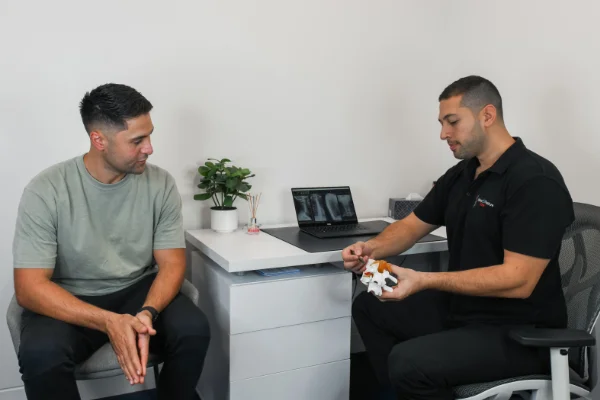
Understanding what actually happens at a first chiropractic visit removes much of the uncertainty that underlies safety concerns. No treatment is applied at the first visit without a full assessment and the patient’s informed consent.
The first visit at Spine and Posture Care begins with a comprehensive case history covering the presenting complaint, relevant medical history, medication use, and any prior investigations or treatment. This history is specifically designed to identify any contraindications or factors that require modified treatment approaches.
The physical assessment follows and includes postural analysis, spinal range of motion testing, orthopaedic examination of the affected regions, and neurological screening. For patients with neck or headache presentations, upper cervical assessment is included. For patients with lower back or leg symptoms, lumbar and sacropelvic assessment is included.
At the conclusion of the assessment, the findings are explained clearly: what has been identified, what treatment is appropriate, what the expected timeline looks like, and what the alternatives are. No care plan is recommended before this explanation is complete and questions have been answered. Treatment begins at the second visit or, if the patient and chiropractor agree it is appropriate, at the end of the first visit following the assessment.
Chiropractic vs Other Treatment Options for Back and Neck Pain
| Factor | Chiropractic Care | NSAIDs | Surgery |
|---|---|---|---|
| Evidence for lower back pain | Strong: Cochrane review 2019, 47 RCTs | Moderate: short-term pain relief only | Reserved for specific structural indications |
| Risk of serious complication | 1 in 100,000 to 1 in 5.85 million treatments | 1 in 25 to 1 in 50 users per year (GI complications) | Significant: infection, nerve damage, failed outcomes |
| Addresses the mechanical cause | Yes: joint restriction and soft tissue | No: symptom management only | Yes: for structural indications only |
| Drug-free | Yes | No | No |
| Suitable for long-term use | Yes: with periodic reassessment | No: GI and cardiovascular risk increases with duration | Not applicable |
| Requires referral in Australia | No | No (OTC) | Yes |
| Private health rebate available | Yes: most extras policies | Not applicable | Yes: through hospital cover |
Conclusion
The research on chiropractic safety is clear, consistent, and considerably more reassuring than public perception often suggests. Serious complications are extremely rare. They are rarer than those associated with the medication alternatives most patients consider safer by default. Mild, temporary side effects are common and resolve quickly. The conditions most commonly treated, including lower back pain, neck pain, and cervicogenic headaches, have meaningful evidence supporting chiropractic as an effective intervention.
What matters most for individual patients is that treatment is delivered by a qualified, AHPRA-registered practitioner who conducts a proper assessment before applying any treatment. We follow this process without exception. Every patient is assessed, every contraindication is screened for, and no treatment plan is recommended without a full clinical picture and the patient’s informed agreement.
Ready to Get Started? An initial assessment answers every question better than any article can. Spine and Posture Care is available at Macquarie Street and Barangaroo Avenue in Sydney CBD. Call +61 2 8040 9922 or book through the new patient offer today.
Frequently Asked Questions
Is chiropractic care safe for older adults?
Yes, with appropriate modification. Older adults are assessed for osteoporosis, joint degeneration, and medication use before treatment begins. Where high-velocity manipulation is not appropriate, gentler mobilisation and soft tissue techniques are used instead.
Can I see a chiropractor without a GP referral in Australia?
Yes. Chiropractors are primary contact practitioners in Australia and no referral is required. A GP referral may be relevant if seeking the Medicare Chronic Disease Management program to contribute to costs, but is not needed for a standard private consultation.
How does chiropractic compare to physiotherapy for back pain?
Both address musculoskeletal conditions and share some techniques. Chiropractic places greater emphasis on specific spinal adjustment to restricted joints. Physiotherapy focuses more on rehabilitation exercise. Many patients benefit from both, and Spine and Posture Care refers to physiotherapy where clinically appropriate.
Will I need to keep coming back indefinitely?
No. Care plans at Spine and Posture Care have defined goals and are reviewed systematically. Once the presenting complaint resolves and tools to maintain spinal health are in place, visit frequency reduces. Ongoing maintenance is the patient’s choice, made with full information.
Is chiropractic covered by private health insurance in Australia?
Most Australian extras policies include chiropractic cover. Rebate amounts vary by fund and tier. Medicare does not cover standard consultations, though the Chronic Disease Management program may contribute with a GP referral. A receipt is provided after every visit for direct fund submission.
The post Is Chiropractic Safe? Addressing the Most Common Concerns appeared first on Spine and Posture Care.
from Spine and Posture Care https://ift.tt/Z8gFsxm
via IFTTT



No comments:
Post a Comment